I began the pre-typesetting read of my book — all 183,000 words of it — a fortnight ago, and immediately relived the never-ending malarkey with the Introduction… Even this late in the day I found myself tweaking the opening paragraph for the twenty-first time. But suddenly this final revisitation seemed to focus for me the underlying issues.
The reason I had eight willing but long-suffering friends read and advise me on this Introduction was that there is a fictive-creative element in this book, it’s not just facts and non-fiction, and I find it impossible to write about something creative that I have created, because if I could have written about it I wouldn’t have created it. In fact I don’t believe one should try to write about something one has created. It’s like trying to describe the self. The self can’t do it. Secretly, I felt that someone else should write the Introduction; but I knew that the convention was against me there and I couldn’t defy it. I compromised by appointing a sort of committee.
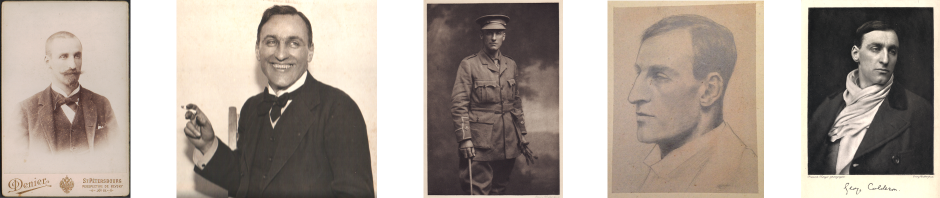
The readers’ initial reaction was, quite rightly, that I was not selling George strongly enough from word one, and they suggested various ‘commercial’ angles, most of which I adopted. One reader even rewrote the whole Introduction from what can only, I’m afraid, be called a clichéd marketing point of view, and I even adopted some of that. As I drafted and redrafted, more and more of my readers approved of the result.
Then came the bombshell. I showed the Introduction in this ‘late’ form to one of the most respected and experienced senior literary figures in London, whom I had known for a while and will call Q. His embarrassment, poor chap, was acute. He repeatedly asked me whether I ‘minded’ him telling me this, but the Introduction was fundamentally wrong, a total disaster, because ‘it’s about you, Patrick, it’s all about you’. I did not mind him telling me this, quite the contrary, but it was something I was extremely sensitive about. Also, I couldn’t help wondering why the other readers hadn’t said something similar. Had they been afraid to? However, I knew that in literary terms Q’s opinion outweighed all the rest, so I profusely thanked him, tore the Introduction up, and started yet again.
I could see that it came down to two extremes of Introduction, a ‘solipsistic’ and a ‘non-solipsistic’. The first tells how the author ‘discovered’ his/her subject, what that subject ‘means’ to the author, why he/she feels the subject’s story must be told, why he/she has told the story this way, etc. The second is focussed from word one on the subject of the biography and basically, as they say, ‘sells’ the subject of the biography as hard as it can; the author is discreet, reverential and practically self-effaced.
Well, reading the Introduction this last time before the proofs, I suddenly saw that even if the ‘committee’ had not criticised the Introduction for being solipsistic, i.e. ‘about you, Patrick, rather than George Calderon’, the pull of all their advice had been in the non-solipsistic direction: ‘get his achievement into the opening words’, ‘mention famous contemporaries/friends in the first ten lines’, ‘get the War into the first paragraph’, ‘get stuck into the romance/sex on page one’, ‘rabbit about the Edwardians, who are flavour of the decade’, ‘drop famous names all over the place and make a person casually reading the first sentence believe he/she will be ignorant and deeply unfashionable if they don’t buy the book’. So my re-jigging in those directions had been a substantial move away from me.
But equally, I felt I could see why Q’s response had been so extreme. He surely had little experience of biographies of unknown people. Obviously, if you are writing a biography of someone extremely well known, it would be ludicrous to drag yourself into it (although I daresay even Peter Ackroyd allows himself a bit about what Shakespeare means to him). Yet how someone ‘discovers’ an unknown, what the unknown means to them, and how they came to write his/her life, are profoundly significant: without them, the book would never have been written and they are surely a vital part of the ‘sell’ of the book. Several readers told me as much; they enjoyed reading the ‘personal’ story behind it all. I was hyper-sensitive about the solipsistic element in my Introduction, because I am aware of the parallels between my and George’s experiences of Russia, our involvement with Chekhov, and Russia-related career difficulties. On the other hand, how I first came across George when I was a literary consultant at the National Theatre, my originally negative reaction, my deeper delving after being commissioned to research the history of Chekhov on the British stage, my ‘discovery’ of George and Kittie’s archives, and my realisation of what vibrant people they were, are surely vital to ‘introducing’ the Calderons?
I think I have now got the balance right between the ‘solipsistic’ and ‘non-solipsistic’ in my Introduction, although I fear there will still be too much there about me for Q and some other readers (but the whole book is about other people!). The underlying issue, I see now, is this: biography is not entirely about its subject, or at least it’s about its subject in a peculiar way, because it is the product of a me reacting with that subject. Whether obtrusively or not, the relation of every biographer to his/her subject pervades the whole of the biography he/she has written. As an example, I take the beautiful biography of Edward Lear by Jenny Uglow, published at the end of last year:

Click the cover to find this book on Amazon.
I have never read a biographical work by Uglow before. She has written so many that I had rather come to regard her as a ‘professional biographer’ who wrote her stories to a very high documentary standard but did so for no particular personal reasons and never got involved much with her subjects. Indeed, she was quoted by Susie Boyt in an article entitled ‘The Experience of Writing a Biography’ (Financial Times 6 June 2009) as saying:
I’m so conscious that it’s dangerous to think of your subject as a friend or to over-identify. It would be completely bonkers to think you could actually get close to them. Liking is dangerous, loving is dangerous because, of course, it will change the way you see things. I hate the idea of things being soppy.
Quite. Thus we get a meticulously informed, densely documented, superbly illustrated, fast-moving account of Lear’s family, youth and early work as a zoological painter that absorbs us and bears us along until…in my case about page 200. At that point I asked myself, where is this going? There had been a minimum of speculation about why Lear’s life was thus — in particular, so restless — what his real ambitions were, what his sexuality was, how good his contemporaries actually thought him as an artist. The impression of motion over substance in Mr Lear: A Life of Art and Nonsense is enhanced by the fact that the chapters are short and there are over forty of them.
But I am so glad I persisted, and I recommend others to. All at once I realised that the reason Uglow’s treatment of Lear’s rejection by his mother, his epilepsy, his relationship with Frank Lushington, his on/off interest in Gussie Bethell, his obsession with memory and the past, his relationship with his lifelong servant Georgio, or with Tennyson, or with Foss his cat, is so, well, unexplicit, so discontinuous, so pointilliste, is not that she doesn’t want to probe or pry, but that she understands these problems of Lear’s so well. Gradually, cumulatively, we understand the complexity of Lear’s relationships too. Beneath Uglow’s low authorial intervention, beneath her ‘restraint’, there must be a profound empathy for her to be able to leave us understanding them so well.
Nevertheless, I have to say that the narrative spine here is too weak for me at times to think of it as biography. After you have followed Lear from Britain to Italy, from here to there by steamer, back to Italy, back again to Britain, per Bradshaw’s all over Britain, back to Corfu, or wherever, several times, you yearn for a bit of generalisation and personal interpretation. Again, you want to know what the biographer makes of it all.
Uglow, or Faber, have got round this problem in a most ingenious way. Every chapter is headed by a Lear drawing and limerick, Lear’s verse and accompanying drawings thickly bestrew the text, and every so often there is a fabulous reproduction of one of Lear’s mind-blowing watercolours or oils. Throughout, Uglow quotes Lear’s poetry and letters copiously. Without wishing to sound cynical, one can only describe this as a marketing masterstroke. It means that Mr Lear: A Life of Art and Nonsense is really a burgeoning Lear compendium, a grandiflora of all that’s best in Lear, the finest Lear Experience for the uninitiated that has ever been confected.
I instinctively feel this ploy detracts from the book as biography, but I cannot deny that it ends by making you feel you know Edward Lear as well as it is, probably, possible to know him. I stress: this is the achievement of Uglow and Lear, of the two authors in their own mysterious dialogue. You end by feeling you know the vulnerable, kind, despairing, hilarious, indignant, rebellious, supremely tolerant and civilised man who had an impossibly modern sense of beauty, who gave endlessly of his time to children and their parents alike, who worked like a Trojan. And to know Mr Lear is extremely pleasant.



Has one become a Fogey?
In 1985, when Sam&Sam needed an ISBN number for N.A. Berdiaev, Aforizmy, I rang up the then registration agency and they sent me a form by post. I filled the form in (by hand, of course) and sent it back to them with a cheque for under £20 (I can’t remember the exact figure). About ten days later, I received a postcard with the number and publication details of the book on. The whole operation had taken fifteen minutes and a ten-day wait.
Today the ISBN service has been, as they say, privatised. It is run by the Nielsen Corporation based in New York. On 12 January 2018 I logged into their UK ISBN Store and was fairly rapidly relieved of £159 for ten ISBN numbers. Note that to buy a single one costs £89, so if you are ever going to publish another book it is in your interest to purchase ten in one go. On the other hand, a comparison of the two figures suggests that £89 is the product of rapacity red in tooth and claw, especially as a modern book has to have an ISBN number… Nielsen have been handed a monopoly!
In effect, I had parted with £159 for a single number, a mere number generated by a computer. Well, not quite, because the text in bold that came with the ten numbers recommended that I use ‘the free online service, Nielsen Title Editor, to supply forthcoming titles and to submit updates to existing product data’. This sounded a good idea, except that it wasn’t free at all, as you could only use it if you had already bought your ISBN number, and of course you had to marry your publication details to the number at some point, because the two weren’t going to come to you on a postcard.
On 22 January at 9.10 I set about registering with the Nielsen Title Editor. It was quite a long template and rejected my data several times. One problem was that it didn’t like the ISBN number I was putting in, another that it kept supplying the wrong telephone number for my address and rejecting the real one, but the worst was that there seemed to be no United Kingdom, Great Britain, Britain, or England on the mile-long alphabetical list of countries to input. At 9.30 I therefore emailed ‘Pubhelp Editorial’. Clearly they are used to such questions, because at 10.01 they emailed me to explain the format in which ISBNs must be input (there was nothing on the template to say) and that ‘United Kingdom’, for some unexplained reason, was ‘5th on the drop down list’. I made these adjustments and at 10.32 received an email confirming my registration. But… ‘Please allow 5 to 10 working days for your name and password for Nielsen Title Editor to be issued.’
(Interpolation: the reason I waited ten days before I tackled registering with the Nielsen Title Editor was that I had received a clear signal from the blurb which came with the ISBN numbers that things didn’t move quickly in this system, so I’d best allow a few days for the numbers to sink into it; also the verbosity of the blurb and the news that it would take 7-10 working days to get an ID and password to me had a damping effect. In a word, the user-unfriendliness of everything so far was a factor in slowing the process down, so I believe the ten-day delay is rightly included in the total experience.)
The following day, 23 January, I received an email from ‘Data Production and Client Services’ at 14.05 asking me how my ‘e-books/digital products are distributed to customers’, as this information was needed to ‘set up your account [never mentioned before] properly’. I supplied the information at 14.23 and at 16.32 came the riveting news that it had been sent to ‘our Supply Data team, who will create the internal codes needed for your organisation, and then send them back to me so that I can continue with your application. This will take a few more [!] working days, and you will be emailed your login details in due course [!]’.
Only two days later I received my username and password (the second so far) from Nielsen, but it came with two riders: (1) although I could access my Title Editor account straightaway, I couldn’t add ‘new title records or make amendments to existing title records for the next 24 hours as any changes made through the site may be lost [!]’, and (2) ‘if you have just registered your first title with us it may take 3-5 [!] weeks to become visible through the Title Editor site’. I waited five weeks, but it wasn’t visible. Another session followed with the Help desk on 2 March, from 11.47 to 12.39, then I got to my record and was able to edit it.
On 5 March came an email from Nielsen informing me that I had ‘registered for Nielsen BookNet Web Online Order Collection Service’, which I had never heard of before. I would have been almost disappointed if it had not come with another ID and password.
Now admittedly the process of acquiring the ten ISBN numbers took only about half an hour (as opposed to a quarter in 1985), but to get my title registered with this ISBN number and visible took two hours and thirty-two minutes of my time and a wait of 39 days compared with ten in 1985. Altogether, the process had taken a quarter of an hour and ten days in 1985 and three hours and 49 days in 2018.
Personally, I think a measured, mature, rational and dispassionate assessment of this process of Nielsen’s suggests that it is not fit for purpose (though the staff are marvellous). However, I am aware that the very act of comparing the purchase of an ISBN number tied to one’s book in 1985 with the process that that involves in 2018 suggests I am just a Fogey. I admit that may be the explanation for my splenetic frustration with the process, but even so the comparison of time intervals is…in-teresting, isn’t it?
In my next post I will look at a more poetic recent case of the same thing, before drawing any Meldrewesque general conclusions about modern life. But in the meantime, I have two questions to followers of the blog and anyone else out there:
1. How/why do the young, i.e. anyone under thirty, who are surely used to efficient, ‘real time’ communication on computers, put up with the sort of torture perpetrated on customers by Nielsen UK ISBN Store?
2. Can anyone with modern business and management experience explain to me how such a nebula of inefficiency and fatuousness comes about?